 |
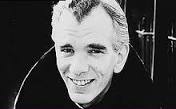
David Whitaker kinda gets shafted in this article, so to make
it up to him, I'm making him the obligatory picture. |
I'm going to be honest, this isn't really a question with an answer that's concrete or even approaches answerable. The closest we can get to a definitive is that the BBC created
Doctor Who and even that's not quite right.
Wikipedia gives the answer "Sydney Newman, C.E. Webber, and Donald Wilson", which comes pretty close. The series itself doesn't address this question in its credits, but the program itself, pressed for a meta-answer, usually responds with "Sydney Newman and Verity Lambert", which comes closer. And, of course, there's any number of different answers you can toss at the thing. Donald Baverstock commissioned Newman to make a sci-fi series! Anthony Cobern wrote the pilot! David Whitacker was the script editor! Hell, if you really want to push it, it was Alice Frick and Donald Bull who determined sci-fi was something the BBC's audience would like! (Never mind that they did this almost a year before anyone who worked on
Who was even an employee at the Beeb.)
Doctor Who is an oddity in this, the era of the superstar showrunner, because there is no clear authorial voice to it the same way you can claim that
Community is very clearly Dan Harmon's baby, or
The Sopranos is David Chase's, or even in the same way you can claim the current seasons of
Doctor Who are the baby of Steven Moffat.
Doctor Who doesn't exist because someone approached the BBC with the idea for a show about a man from another world who popped about time and space in a dimensionally improbable box. It exists because Donald Baverstock needed something that could fit between
Juke Box Jury and the sports scores, and the person he asked to make such a show had worked on a lot of sci-fi. Hell, Baverstock didn't even ask for sci-fi, just something that children, teenagers, and adults alike would want to watch.
What's more frustrating, then, is the diversity with which ideas were spread around, and how damn impossible it is to determine who first came up with what, or how many of these ideas matter. Sydney Newman allegedly came up with the name Doctor, the show's title, and the idea of a ship bigger on the inside than it is on the outside. Does that mean he created the show? After all, you can take away anything from that. C.E. Webber, when drawing up the series bible, ended up with a show about with the Doctor as a neo-Luddite mucking about with the past in order to stop the future from happening. So clearly the name Doctor and the concept of the TARDIS are far from integral to what makes
Who itself.
Webber also came up with the dynamics followed by much of the 1960s--the Doctor as the mysterious, unknowable driving force, a male action-hero figure, an intelligent woman who could counterbalance the Doctor, and a girl in constant need of rescue. Hell, strip down the assigned gender roles and the required presence of all three and he more or less defined companion dynamics for all time. Steven, Ben, Jamie, the Brig, Harry, Leela, Ace, and River are Ian descendants; Zoe, Liz, Sarah Jane, Romana, Nyssa, Martha, and Donna owe much to Barbara; and Vicki, Dodo, Victoria, Peri, and Mel are mostly Susan clones. Sure, there's some overlap, but Webber is responsible for the vast majority of what we think of when we think "companion." So, he created the series, right?
Well, sure, if you think
Doctor Who is mostly an outlet by which people can be taught about science and history, and the Doctor as the central villain figure.
In order to determine who created
Doctor Who, we have to get at the heart of what
Who is, the absolute immutables by which we define it. It clearly isn't just about a mysterious figure who travels through time and space with people who fulfill certain archetypes in a dimensionally improbable ship. There's something missing from the equation. And that is that the Doctor has to be a hero. He needs to be doing good, or at least attempting to.
William Hartnell's Doctor is not a hero, at least not at first. So what made him a hero?
It's really hard to say, especially given how difficult it is to draw a line. William Hartnell is often working in his own best interest, but this often has the side effect of helping others, even as early as
An Unearthly Child. But no one's going to argue that cavemen, or even the historical side characters of a given story, define
Doctor Who.
But you'd be hard-pressed to argue the monsters
don't, just as hard-pressed as you would be to find someone, anyone on staff who honestly thought what
Doctor Who needed was monsters. And their absense from early
Who history is palpable. That's not to say that their were no aliens, but that any aliens were either completely human (even in appearance) or were not inherently antagonistic. Until the Second Doctor turns up, the Daleks
are the monsters in
Doctor Who, without exception.
One could argue that, in this regard, it's Terry Nation who deserves the third credit, but the problem with that is that Nation came in far too late and, moreover, was more interested in the Daleks as an end than he was in
Doctor Who. He wasn't actively attempting to define the show the way Newman and Webber were. And so that credit has to go to whoever let them through to begin with.
Verity Lambert. Oh, could you be more awesome? She didn't just bully her bosses into letting the Daleks through. She saved Ron Grainer and Delia Derbyshire's theme song and Peter Brachacki's set design. She cast William Hartnell. And she did it all as a 26-year-old Jewish woman in the 1960s. To anyone who wants to claim that classic
Who is
inherently sexist (as opposed to occasionally or incidentally), that claim ends here, months before the show even aired. Everything you love about the show happened because a woman stood up for it. She, more than Newman or Webber, earned the credit she gets for the show's origins.
So, what, Newman, Webber and Lambert created the show? Kind of. Because, see, there's still a lot missing from this. Like the fact that years later, John Wiles and Donald Tosh invented regeneration, the motor on which the series runs. Kit Peddler and Gerry Davis invented the Cybermen, which defined that the Doctor fought for free will and feeling rather than against monsters. Barry Letts, Terrance Dicks and Malcolm Hulke invented the Time Lords and UNIT, and with it the idea that the Doctor fights on principle and against authority for authority's sake. Robert Holmes made the Doctor the sort of man who could go toe-to-toe with beasts that had power intrinsically, rather than beasts who happened to have it. And that Andrew Cartmel and Ben Aaronvich, way at the end, invented the idea of the Doctor who could scheme as well as simply thwart. And that's just off the top of my head. Remove any of these elements and there's something massive missing from the show's present.
All of which is to say that it doesn't really matter who "created"
Doctor Who. Whoever is currently in charge carves their own way, a way which becomes irremovable from the show's present and gets built upon in a neverending cycle of renewal.
The BBC
commissioned Doctor Who. Anyone who touches it
creates it.


.jpg)


